


Hillside homes can deliver privacy, natural light, dramatic outlooks, and layouts that feel far removed from the surrounding city. They can also introduce questions that are easy to miss during an exciting showing, including drainage, access, structural maintenance, insurance, and the practical value of outdoor space. The right property can be exceptional, but buyers should evaluate the full site, not simply the view.
For buyers comparing high-end homes across San Francisco and Marin County, San Francisco real estate experts Applegarth + Warrin, also known as Warrin Team Real Estate, provide local buying and selling guidance for distinctive properties on both sides of the Golden Gate. Their website focuses on luxury homes and neighborhood-level market insight in areas such as San Francisco, Belvedere, Sausalito, Mill Valley, and Ross, where slope, access, privacy, and outlook can materially affect a home’s appeal and long-term value.
Study The Lot Before The House
Begin outside. Walk the parcel slowly and consider its grade, slope, usable yard area, driveway configuration, stairs, and access points. A large lot is not automatically more useful if much of it is steep, difficult to maintain, or inaccessible.
Look for exposed roots, bare soil, signs of erosion, standing water, leaning retaining walls, or cracked paving. Also consider what daily life looks like: Can deliveries be delivered to the front door? Is parking convenient? Is there a usable place for outdoor dining, gardening, pets, or play? A smaller but well-positioned lot may be more functional than a larger, challenging hillside parcel.
Review Drainage And Water Management
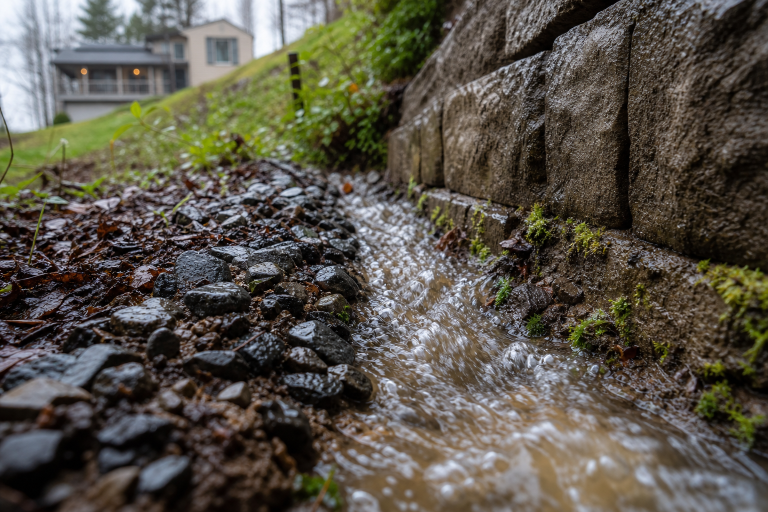
Water management is one of the most important parts of hillside ownership. Inspect gutters, downspouts, drains, swales, catch basins, and the drainage behind retaining walls. Ask where stormwater travels during a major rain event and whether runoff moves toward the home, garage, neighboring parcels, or public streets.
Inside, watch for musty odors, mildew, water staining, swollen flooring, damaged baseboards, or moisture in a basement or crawl space. Request records for prior leaks, waterproofing, drainage work, soil movement, and retaining-wall repairs. Water problems can be costly because a solution may involve both the building and the surrounding slope.
Check Hazard Maps And Site Conditions
A visual inspection is useful, but it should not be the only review. Buyers can begin with the California Geological Survey hazard maps to review available public information related to landslide, seismic, and geologic conditions. These tools are screening resources, not a determination that a particular home is safe or unsafe.
A landslide inventory shows documented past events, while a susceptibility map identifies areas where conditions may be more favorable for slope movement. Neither replaces a site-specific engineering report. If the property has a steep slope, evidence of movement, major retaining structures, unclear drainage, or a history of repairs, consider consulting a geotechnical, civil, or structural engineer during due diligence.
Review Flood And Insurance Questions Early
Insurance should be investigated before contingencies are removed. Flood exposure, wildfire risk, slope conditions, rebuild costs, and prior claims can all affect availability, deductibles, exclusions, and premiums. Use the FEMA Flood Map Service Center to check official flood-hazard information for the address and nearby area, then discuss the findings with a licensed insurance professional.
Request realistic quotes, not broad estimates. Ask about separate flood coverage, wind or wildfire limitations, policy limits, loss history, and whether the insurer requires repairs or inspections before binding coverage. Terms and pricing can change, so confirmation should be property-specific.
Inspect Structural Systems Carefully
Pay close attention to the foundation, crawl space, basement, retaining walls, decks, balconies, exterior stairs, and handrails. Diagonal cracks, uneven floors, sticking doors, separated trim, and gaps near windows may be ordinary age-related conditions or may warrant further evaluation.
Ask whether the home has had foundation work, seismic upgrades, structural reinforcement, or drainage repairs. Obtain permits, invoices, engineering reports, warranties, and contractor details. Fresh paint and stylish remodeling can improve appearance, but they do not necessarily resolve older site or structural issues.
Confirm Access, Parking, And Daily Convenience
Drive to the property more than once, ideally at different times and in poor weather if possible. Review road width, turning space, steep driveways, stairways, sidewalks, garage usability, and emergency access. Consider visitors, deliveries, contractors, mobility needs, and future aging-in-place.
A buyer may love a panoramic view but later find that a narrow, steep approach makes every grocery trip, guest visit, and rainy-day departure feel burdensome. Convenience is part of value, especially when comparing homes with similar views.
Separate View Value From Resale Value
Views can support demand, but they do not guarantee appreciation. Determine whether the outlook depends on neighboring trees, vacant land, a low-rise structure, or a condition that could change. Review nearby zoning, easements, and likely development before assigning a premium to a view.
Compare the home against similar sales with different levels of privacy, outdoor usability, access, and condition. The strongest resale candidates offer a complete package, not just a photograph-worthy outlook.
Examine Permits, Zoning, And Renovation Limits
Confirm the legal bedroom count and the status of additions, decks, retaining walls, garages, and converted rooms. Review open or expired permits, code notices, and unpermitted improvements. Before assuming an expansion, grading project, tree removal, or exterior redesign is possible, contact the local planning or building department.
Future plans should be tested before an offer becomes binding. A property can be a great fit as it stands, yet a poor fit if the improvements needed to make it work are restricted or impractical.
Build A Complete Ownership Budget
Look beyond the purchase price and create a five-year ownership estimate that includes:
- Insurance premiums, deductibles, and possible separate policies.
- Drainage, retaining-wall, tree-care, and slope-management expenses.
- Roof, deck, stairs, exterior, and driveway repairs.
- Periodic inspections and possible engineering consultations.
- Shared-road, private-drive, or access-related costs.
A lower-priced hillside home can be more expensive over time than a higher-priced property with simpler access and maintenance needs.
Use A Clear Pre-Offer Checklist
- Read disclosures, inspections, permits, and repair records.
- Check hazard, flood, zoning, and insurance information.
- Inspect drainage, retaining walls, decks, stairs, and foundations.
- Walk the lot after rain when practical.
- Evaluate parking, access, commute time, and daily usability.
- Ask qualified professionals to review unusual risks.
- Set an offer limit based on total ownership cost, not emotion.
Common Questions Buyers Ask
Are Hillside Homes A Good Buy In 2026?
They can be, provided the location, construction quality, drainage, insurance, access, and price align. A well-maintained hillside home may offer rare privacy and views, but buyers should price in the responsibilities that come with the setting.
Should A Buyer Hire A Geotechnical Engineer?
An engineer may be worthwhile when there are steep slopes, signs of movement, substantial retaining structures, recurring moisture, past repairs, or unclear drainage records.
Does A View Always Increase Resale Value?
No. Views matter, but privacy, access, condition, usable outdoor space, and the likelihood that the view will remain protected also influence resale strength.
Conclusion: Buy The Whole Property, Not Just The Outlook
Hillside ownership can be deeply rewarding when the home, site, budget, and lifestyle fit together. A disciplined review of land, water, insurance, structure, permits, and daily convenience helps buyers make an informed decision and enjoy the view without overlooking what supports it.
Post HTML